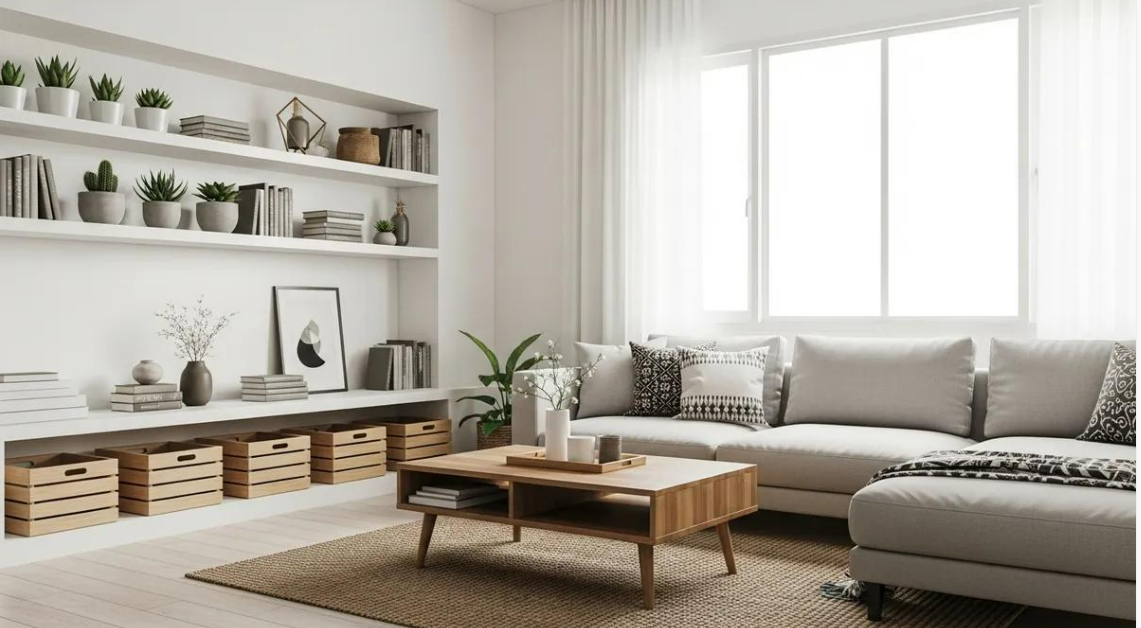
A comfortable home does not necessarily need expensive furniture, large rooms or costly renovations. In many cases, the difference between a crowded living space and an inviting one comes down to how belongings are arranged and how available space is used.
Household organisation can also save time. When frequently used items have designated places, people spend less time searching for keys, documents, clothing and kitchen equipment. A well-organised home can make everyday responsibilities easier to manage.
The good news is that you do not need to organise everything in one day. Small improvements, made consistently, can produce lasting results.
1. Start by removing unnecessary clutter
Before purchasing storage containers or rearranging furniture, examine what you already own.
Many homes accumulate items that are rarely used, including broken appliances, outdated paperwork, unused kitchen equipment and clothing that no longer fits. These belongings occupy valuable space and can make cleaning more difficult.
Begin with one area, such as a kitchen drawer, wardrobe shelf or bedside table. Separate the contents into items to keep, donate, recycle, repair or discard.
Avoid throwing away important documents or usable belongings without considering their value. The objective is to create space for the things you genuinely need.
2. Give frequently used items a permanent place
One of the simplest organisation methods is to assign a specific location to everyday belongings.
Keys can stay in a small tray near the entrance. Cleaning supplies can be grouped in an appropriate storage area. Important documents can be kept in labelled folders, while charging cables can be stored together.
The system should be easy enough for everyone in the household to follow. Complicated arrangements often fail because returning items to their proper places requires too much effort.
3. Make use of vertical space
When floor space is limited, walls and the space above furniture can provide additional storage.
Shelves, wall-mounted organisers and hooks can hold selected household items without taking up much floor area. In a small bedroom, vertical storage may free space around the bed. In a kitchen, wall-mounted racks can help organise utensils.
Safety should always come first. Heavy objects need secure mounting, and shelves should not obstruct windows, exits or essential electrical equipment.
4. Organise your wardrobe by category
A crowded wardrobe can make choosing clothes unnecessarily difficult.
Arrange clothing into categories such as workwear, casual clothing, exercise wear and special-occasion outfits. Frequently used items should be easy to reach, while seasonal belongings can be stored separately if space permits.
Fold suitable clothing neatly and use hangers for items that crease easily. Before purchasing additional organisers, check whether rearranging your existing wardrobe would solve the problem.
5. Create a more functional kitchen
The kitchen becomes easier to use when items are stored according to their purpose.
Keep commonly used cooking equipment within convenient reach. Group similar ingredients together, and label containers when their contents are not immediately obvious. Store food safely and follow the manufacturer’s guidance for refrigeration and shelf life.
Check cupboards periodically for expired products and ingredients that have been forgotten at the back of shelves. This can reduce waste and help households plan meals around food they already have.
6. Improve storage in small rooms
Small rooms benefit from furniture and storage arrangements that serve more than one purpose.
For example, storage boxes can fit beneath a suitable bed, while a compact desk can create a work area without requiring an entire room. Foldable furniture may also help in spaces used for several activities.
Measure available space before buying furniture. A product that looks attractive in a showroom may be too large for the room where it will be used.
7. Keep household documents organised
Receipts, warranties, identification documents, school records and service agreements can easily become mixed together.
Use clearly labelled folders or a secure filing cabinet. Digital copies may provide an additional backup, but protect sensitive files with strong passwords and suitable access controls.
Do not discard original documents simply because you have scanned them. Some records may need to be retained in their original form, depending on their purpose.
8. Establish a simple daily cleaning routine
A home is easier to maintain when small tasks are handled regularly instead of being postponed until they become overwhelming.
A short evening routine might involve clearing kitchen surfaces, returning misplaced items, preparing clothes for the next day and removing rubbish where necessary.
Divide larger chores across the week according to the household’s schedule. The routine should be realistic rather than so demanding that it becomes difficult to maintain.
9. Organise shared spaces with everyone in mind
Living rooms, bathrooms and dining areas are often used by several household members. Organisation works best when everyone understands the arrangement.
Use shared baskets or designated shelves for common items. Agree on simple expectations, such as returning remote controls to one location or keeping walkways clear.
In households with children or older adults, consider accessibility and safety when deciding where to store everyday belongings.
10. Review your system regularly
A storage arrangement that works today may need adjustments as household needs change.
Review your rooms every few months. Check whether storage spaces are overcrowded, whether frequently used objects are difficult to reach and whether any furniture is preventing efficient movement.
You do not need to buy new products every time a problem appears. Sometimes moving a shelf, changing a routine or removing unused belongings is enough.
Conclusion
Organising a home is less about achieving a perfect appearance and more about making everyday life easier. By removing unnecessary clutter, using available space wisely, arranging belongings logically and maintaining simple routines, households can create a more functional environment without spending heavily.
Choose one small area and begin there. Once the first improvement becomes part of your routine, applying the same approach to the rest of the home becomes much easier.