Every day, people encounter news reports, advertisements, opinions, videos and sponsored content through digital devices. Some material provides useful information, while other content may be misleading, incomplete or designed primarily to influence purchasing decisions.
Media literacy is the ability to access, evaluate, understand and create media content responsibly. It helps people recognise the difference between information and opinion, assess the purpose of a message and make more informed decisions about what they read or share.
Understanding the purpose of media content
Before accepting a message, consider why it was created.
A news report may aim to explain an event, an advertisement may encourage a purchase, and an opinion article may persuade readers to support a particular viewpoint.
These purposes can overlap. A sponsored article, for example, may provide useful information while also promoting a company.
Readers should examine disclosures, the publisher’s identity and the language used to understand the context.
Distinguishing facts from opinions
A factual statement can be investigated using evidence, while an opinion expresses a judgement or interpretation.
Consider the difference between reporting that a business opened three branches and describing that business as the best in its industry. The first statement can be checked against records, while the second requires defined criteria and supporting evidence.
Good media literacy involves asking what evidence supports a claim and whether alternative explanations exist.
Understanding advertising and sponsorship
Advertisements influence many forms of online content. Influencers, websites and publishers may receive payment or other benefits for promoting products and services.
Readers should look for sponsorship disclosures and consider whether a recommendation is independent.
Commercial relationships do not automatically make information false, but they can affect how a message is presented.
Understanding these relationships helps consumers evaluate recommendations more carefully.
Recognising emotional manipulation
Some messages use fear, anger or excitement to encourage immediate reactions.
Emotional communication is not necessarily misleading, because real events can naturally produce strong feelings. However, emotionally charged language should not replace evidence.
Pause before sharing content that makes an extraordinary allegation or encourages immediate action. Check whether the source provides supporting details.
Teaching media literacy in schools
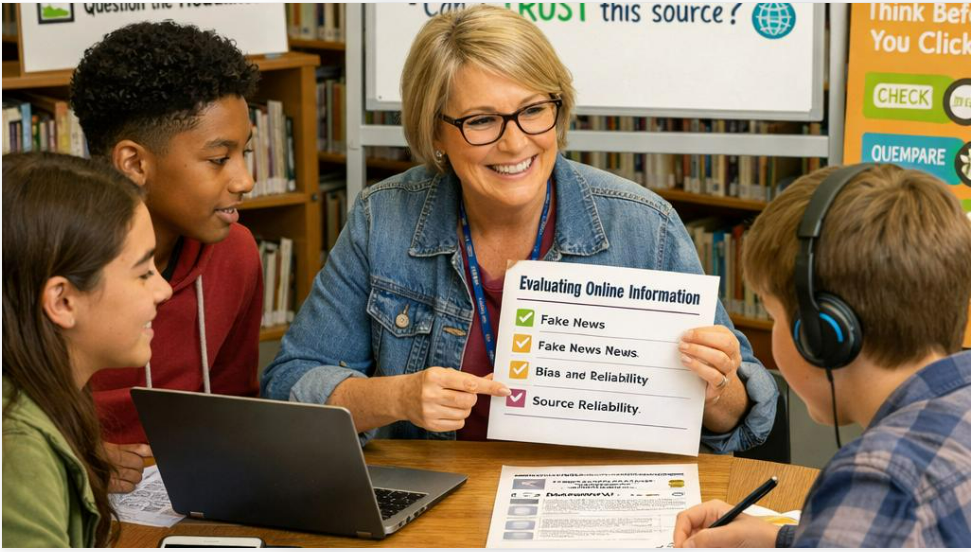
Schools can introduce media literacy through practical activities.
Students might compare how several publications cover the same event, identify unsupported claims in an advertisement or investigate the origin of an image.
These exercises encourage learners to ask questions rather than memorise a list of supposedly trustworthy websites.
Media literacy is also relevant to adults who use digital services for work, business, education and personal communication.
Responsible content creation
People who publish blogs, videos and social media posts also have responsibilities.
Creators should verify factual claims, respect copyright, obtain appropriate permission for sensitive material and correct significant errors.
They should distinguish personal experiences from general evidence and avoid presenting speculation as established fact.
These principles are particularly important for websites that publish information intended to educate a broad audience.
Conclusion
Media literacy helps people understand how information is created, distributed and interpreted.
By examining sources, distinguishing facts from opinions and recognising commercial or emotional influences, readers can make more informed decisions. These skills are valuable in education, employment, business and everyday life.